Skip to content

Emergency heart advice

There are two heart conditions that need immediate emergency care; a heart attack and a cardiac arrest. If a person suffering from one of these doesn’t get medical help quickly, they could die.

Heart attack

A heart attack happens when an artery becomes obstructed, restricting the flow of blood to the heart. The most common sign of a heart attack is chest pain, though there are other symptoms. Left untreated it can lead to a cardiac arrest, which is when the heart stops beating.

When a clinician arrives, they will perform an assessment that includes an electrocardiogram (ECG) that looks at your heart. If we think you are having a heart attack we will take you quickly to a specialist heart hospital.

How to spot a heart attack, when to call 999

Cardiac arrest

A cardiac arrest occurs when the heart stops pumping blood around the body, and can be a result of heart attack, choking or trauma.

If someone is suffering from either of these conditions you need to call 999 for an ambulance immediately.

We have worked hard to raise awareness of the signs of cardiac arrest, and we provide basic life-support training courses.

As a result, the number of people surviving cardiac arrest has risen significantly over the past few years, but more can still be done.

Learn to recognise the signs of a heart attack or cardiac arrest and the action you can take, and you may be able to save someone’s life.

How to help a person in cardiac arrest

When someone suffers a cardiac arrest, their heart stops beating.

This means blood is no longer being pumped around their body and they are clinically dead.

The longer they go without what is known as emergency life-support, the harder it is to restart their heart. For every minute emergency life support is delayed their chances of recovery dramatically reduce.

Anyone can save a life – even as a passer-by in the street. When a person is in cardiac arrest it is vital they receive prompt intervention even if you have not had formal training.

This intervention is: calling 999 immediately, starting chest compressions if it is safe to do so and sending someone to get a defibrillator if one is nearby.

Chest compressions pump blood around the body but it’s also really important to use a defibrillator if one is available to you.

Chest compressions aim to continue to supply oxygen to the brain and other vital organs, while the heart is not beating. A defibrillator will attempt to allow the heart to restart.

By using a defibrillator you cannot make the situation any worse.

Defibrillators only provide a ‘shock’ to a person who needs one.
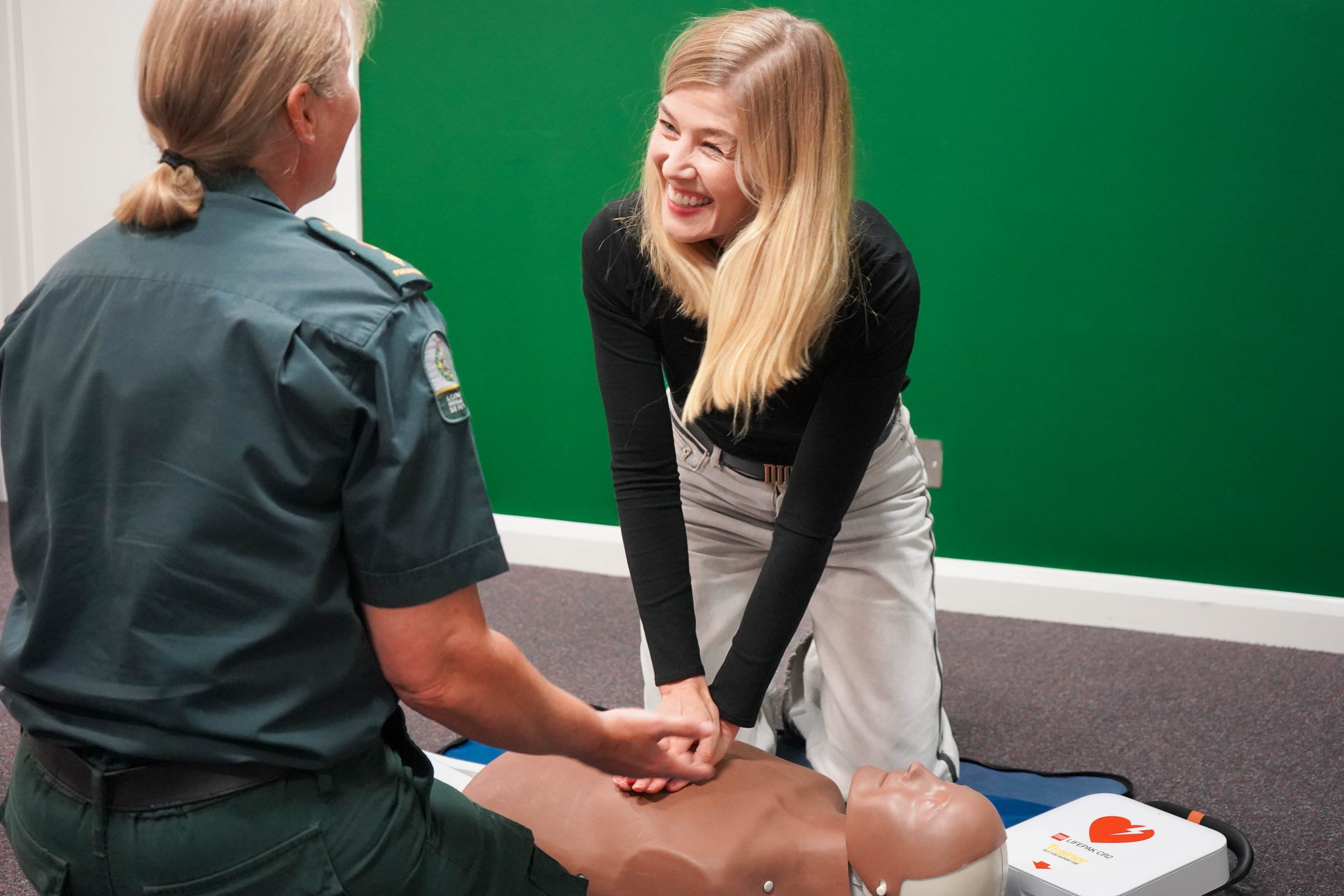
Learn CPR and how to use a defibrillator

Steps to take when performing CPR

  1. Make sure it is safe to approach and then check for signs of life.
  2. Check to see if the patient is breathing normally, if the patient is not breathing or making irregular gasps this is not normal.
  3. Call 999 and if there’s someone with you, send them to get a defibrillator.
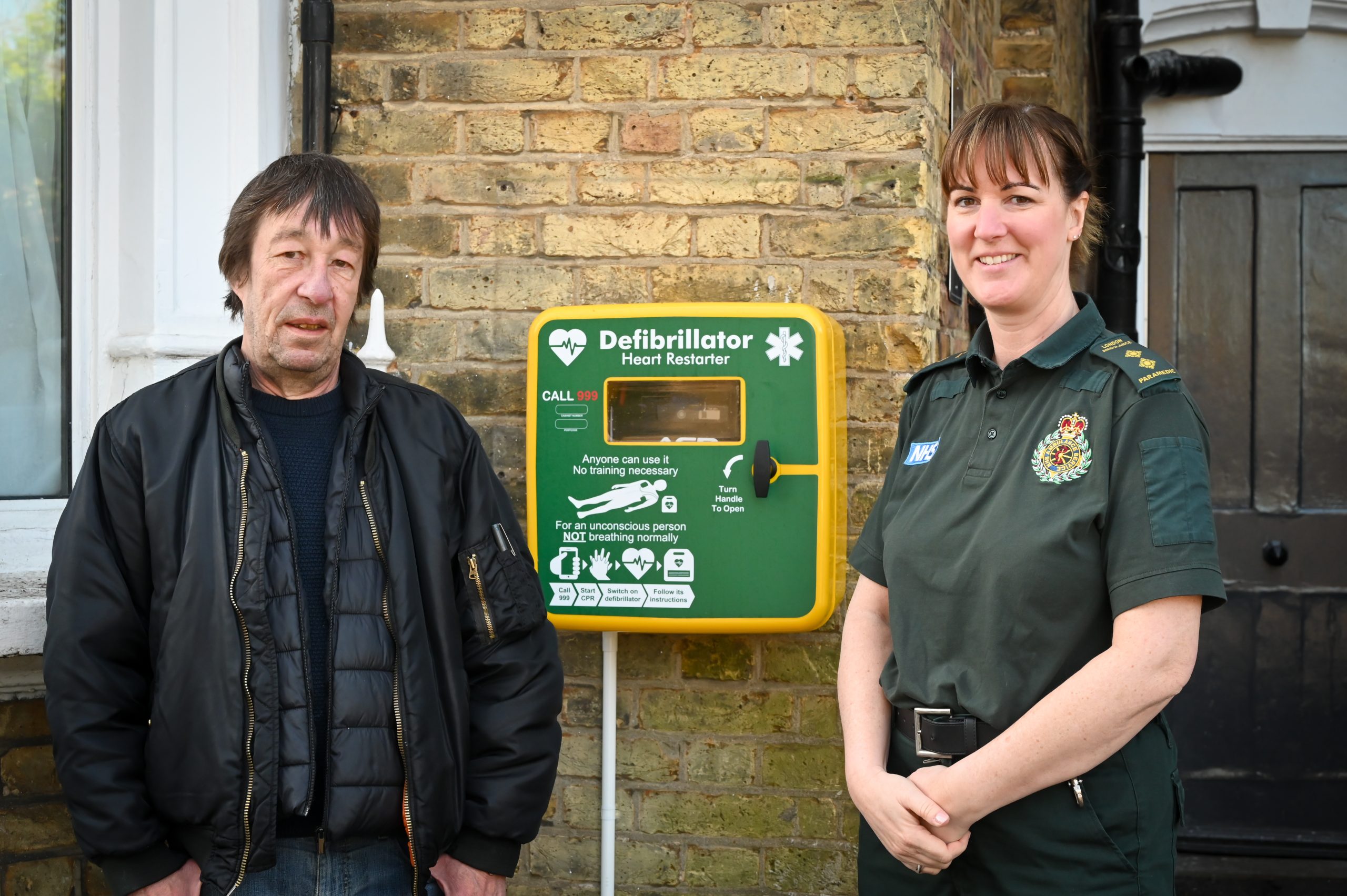
  4. Defibrillators are located in large shops, GP surgeries, dentists, libraries and many other public places
  5. The call handler will explain simply and clearly what you should do, so set your phone on speaker mode or make sure you can hear it.
  6. Make sure the patient is lying on their back on the floor or the ground and remove anything under their head.
  7. Place the heel of your hand on the breastbone – in the centre of the chest – right between the nipples.
  8. Put your other hand on top of that hand.
  9. Pump the chest hard and fast, at least twice per second and two inches deep.
  10. Let the chest come all the way up between pumps.
  11. Count out loud while you do this – the call handler will count with you and advise you if you need to speed up or slow down your compressions.
  12. If there is a defibrillator available to you, listen to the call handler’s instructions on when to use it, such as how to apply the pads to the patient’s chest. Further instructions on using the defibrillator are below.

How to use a defibrillator

Before you use the defibrillator, undo or remove any clothing from the patient’s chest. This includes a bra. St John Ambulance’s CPR Bra campaign found one in three people are afraid to give CPR to a woman in public as they are worried about touching their breasts – even if it is necessary to save their life. In a cardiac arrest emergency, every second counts and bras should be removed in order to properly place the defibrillator pad.

Steps to take when using a defibrillator

Open the defibrillator and if there’s an ‘On’ button, press it.

  1. Find the pads – peel off the backing and apply the pads to the bare chest as shown in pictures that come with the defibrillator.
  2. Once the pads are on, the defibrillator will analyse the patient’s heart and determine whether or not it needs to ‘shock’ the patient. Do not touch the patient while the analysis occurs
  3. The machine will tell you what to do. Follow its instructions – which are audible and visual.
  4. If the defibrillator’s analysis does not find a shockable rhythm, resume chest compressions.
  5. Keep doing chest compressions and listen to the instructions from the call hander and until ambulance crews are on scene and tell you otherwise.
Cookie Settings