By day, Anika works as an Analyst for a cybersecurity company. In her spare time, she volunteers as a Community First Responder (CFR) for London Ambulance Service, helping people experiencing medical emergencies before an ambulance crew arrives.
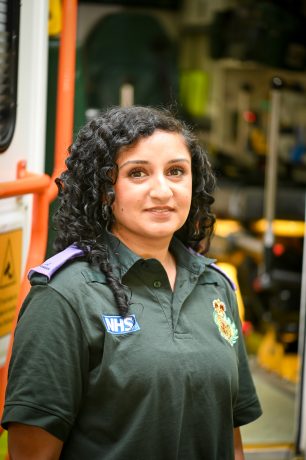
Anika was inspired to become a CFR because she wanted to help bridge the gap between the initial 999 call and the arrival of emergency responders. She believes that “ordinary people can be trained to deliver extraordinary care in times of need” and values the opportunity to support people in her local community.
“I can help my local community by taking responsibility for the active wellbeing of the people I share my neighbourhood with,” she says.
Community First Responders volunteer at least 16 hours a month in their spare time, responding to emergencies across their local areas. Each CFR is equipped with a device connected to the London Ambulance Service dispatch system, allowing them to receive and accept incidents while on duty. Whether at home, out in the community or going about their day, CFRs can be alerted to a nearby emergency and make their way to the scene.
CFRs are often dispatched to Category 1 incidents, including cardiac arrests and patients experiencing severe breathing difficulties, where early intervention can make a life-saving difference.
To prepare for the role, Anika completed training delivered by London Ambulance Service trainers. Describing the course as “intense, but not hard to learn”, she said the training gave her the knowledge and confidence needed to respond effectively to medical emergencies.
While all CFRs commit to a minimum number of volunteering hours each month, many fit their shifts around work, family and other commitments. Anika typically volunteers in shifts of four to five hours, spread across the month to meet her commitment.
Volunteer wellbeing is a key priority, and support is available whenever it is needed. Following particularly challenging incidents, CFRs receive welfare check-ins and have access to additional support services.
Anika describes the support she receives as “amazing”. She explains that after significant incidents, responders and ambulance crews often come together to check on one another and ensure anyone needing further support can access it quickly.
The London Ambulance Service is always looking for new volunteers to join its Community First Responder programme. Successful applicants complete online pre-learning before attending a four-day FutureQuals Level 3 Award for First Responders on Scene: Ambulance Service Community Responder course. The service provides all training, equipment and uniform needed to begin volunteering.
By becoming a CFR, volunteers have the opportunity to develop valuable lifesaving skills while making a real difference to the communities they serve.
To find our more about our CFR’s role, please visit: www.londonambulance.nhs.uk/getting-involved/volunteering-with-us/community-first-responders