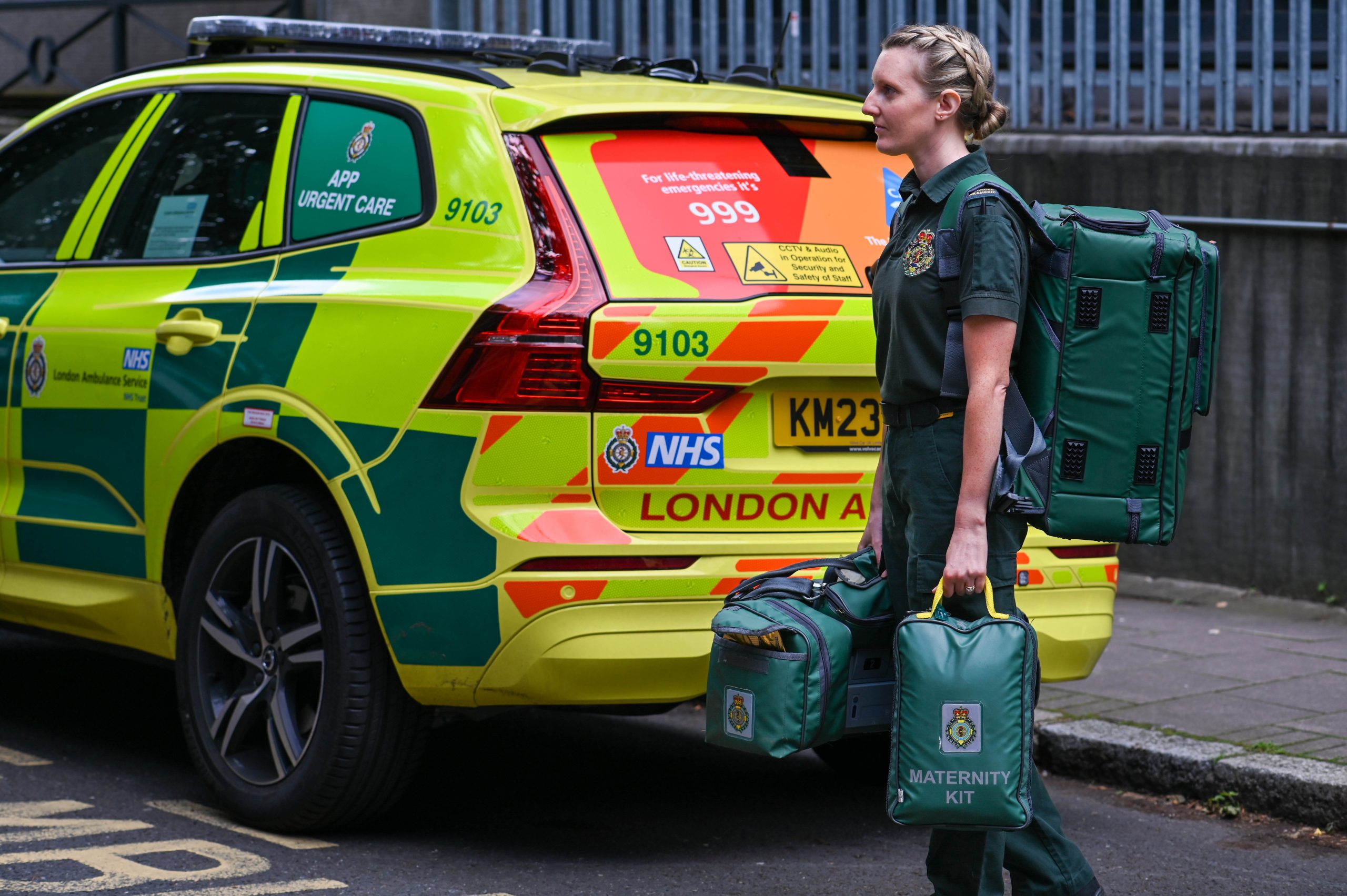
All pregnant women and people can access NHS maternity services. Accessing healthcare early in pregnancy can reduce the risk of complications for you or your baby. Maternity care is urgent and necessary so it will never be refused. Book an appointment with a midwife by 10 weeks of pregnancy.
Calling 999 if you are pregnant
Information for patients and families about the right time to ring 999 when pregnant.
Calling 999 during pregnancy
Vaginal bleeding
Call 999 if:
Bleeding is heavy (soaking through a sanitary pad in less than an hour) or there are signs of heavy blood loss: rapid heart rate, breathing problems, dizziness or fainting.
Feeling out of breath
Call 999 or go to A&E if you feel breathless and:
- feel faint, dizzy or you pass out
- have chest pain
- your heart is beating fast or feels abnormal
- have swelling to one leg
- feel like you are gasping for air and it is hard to breathe
Headaches
Call 999 if you:
- have a seizure
- are unable to speak
- have sudden onset of worst headache ever
- suffer loss of consciousness
- are confused or not alert
Signs of labour
Call 999 if:
- you think baby is coming and you have a strong urge to push
- you can see part of your baby or the umbilical cord coming from your vagina
- there is heavy bleeding
Mental health
Call 999 or go to A&E if you have:
- any thoughts to harm yourself or someone else
- hallucinations or delusions
Nausea and vomiting
Call 999 if you experience:
- slurred speech or confusion
- severe breathlessness
- discoloured or mottled skin (skin that looks patchy or irregularly coloured)
Calling 999 after pregnancy
Call 999 you have any of these symptoms after birth:
- heavy bleeding from your vagina, and you feel dizzy or faint
- pain in your chest or you have severe breathing problems
- seizure, slurred speech, confusion, weakness in arms/legs
- sudden severe headache, loss of vision or double vision
Call 999 if your baby has any of these symptoms:
- breathing difficulties or the baby has stopped breathing
- making grunting noises or pauses when breathing
- turning blue, purple or black
- unresponsiveness or floppy
- rash that does not go away with pressure
- any seizure or fit
- extreme lethargy
- you are extremely worried something is wrong with them
Other pregnancy or postnatal concerns
Baby movements
Most people usually begin to feel their baby move between 16-24 weeks of pregnancy. If you are worried about your baby’s movements DO NOT wait until the next day to seek advice. You must contact your local maternity unit immediately.
If you have any other concerns, speak to your maternity provider or contact 111 if your maternity provider is not available.
Additional guidance
If you have any additional concerns, or would like to find more information on pregnancy, head to the NHS website.