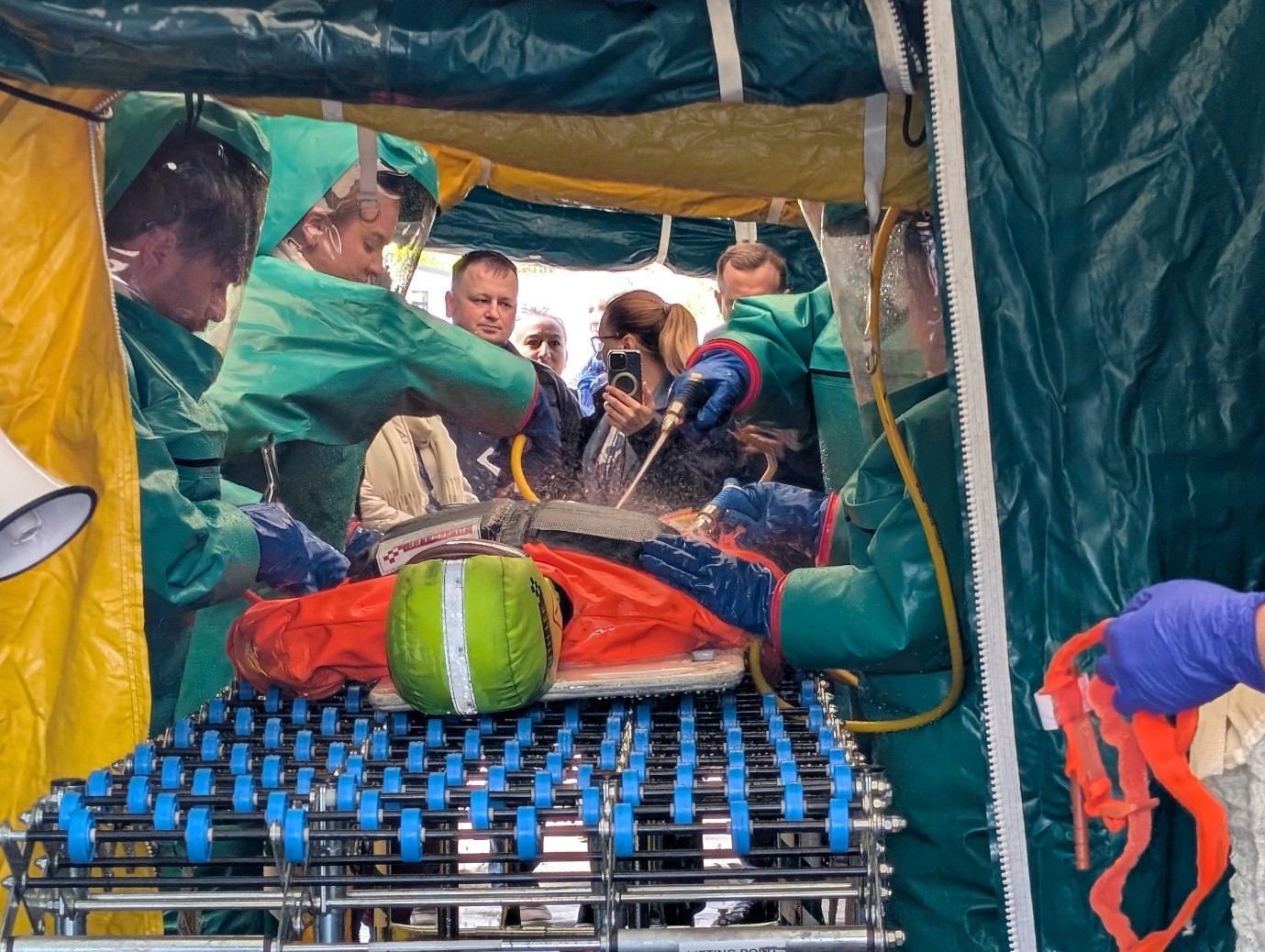
The NHS Resilience Emergency Capabilities Unit (ECU) is a nationally coordinated function designed to support NHS clinical delivery in high‑risk, complex, or major incidents. NHS England commissions the service, while the operational delivery is hosted by a designated host organisation. These obligations arise from:
- The Statement of Requirements 2024–2029 (host organisation deliverables)
- The NHS Terms and Conditions for the Provision of Services (contractual obligations on the Supplier)
The host organisation provides the support for the ECU to act as a live NHSE department. The hosts’ overarching responsibility is to work with NHS England to ensure successful execution of the national work programme, including stakeholder engagement, resource provision, governance oversight, and support services.
It is expected to maintain the infrastructure, personnel, and systems necessary for day‑to‑day operations and for national clinical preparedness.
The NHS Emergency Capabilities Unit is currently hosted by the London Ambulance Service NHS Trust.
Key Deliverables of the Host Organisation
The Statement of Requirements 2024–2029 defines what the host organisation is required to deliver.
The purpose of the Statement of Requirements is to define what the host responsibilities are to enable the ECU to maintain a national state of readiness, ensure all assets for training and deployment are maintained to national standards, support and logistical deployment can be coordinated rapidly during incidents and that a 24/7 on‑call subject matter expert rota is in place, meeting national requirements for timeliness and safety escalation.
The host organisation responsibilities are therefore defined as;
Partnership and coordination with NHS England
- Collaborate closely with NHS England to deliver the work programme set annually
- Participate in bi‑monthly and quarterly meetings to discuss progress, risks, finances, stakeholder engagement, performance indicators, and benefits realisation with NHSE
- Engage in the structured contract management arrangements established by NHS England
- Operate fully transparent open-book accounting for all finances related to the ECU
Stakeholder engagement
- Facilitating engagement across all NHS ambulance services in England to ensure alignment with user needs
- Maintaining links with devolved administrations and Crown Dependencies to align processes where appropriate (not for direct service delivery, but for coordination and awareness)
- Supporting collaborative working with other emergency responders, regulators, and health service providers as necessary
Provision of core corporate services
- Corporate governance and oversight
- Financial management, including reporting and budget monitoring
- Indemnity and insurance appropriate to the nature of the service
- Human resources, ensuring provision of suitably qualified, competent, experienced staff, including agreement with NHS England for senior appointments
- IT and communications support
- Estate services, including managing leased facilities required for training and delivery
- Fleet services, specifically for the national reserve and training fleet associated with interoperable capabilities
- Procurement services for items required in service delivery (excluding procurement of framework agreements for interoperable capabilities)
- Other services necessary for daily operational effectiveness
Workforce and resource responsibilities
- Ensuring staff are appropriately qualified, experienced, and security‑vetted to NHS England‑approved levels
- Managing any TUPE transfers
Facilities and location responsibilities
- Must lease estates using contract‑funded mechanisms
- May host operations at suitable locations across England, determined in collaboration with NHS England
- Must support national travel requirements for staff
The Statement of Requirements allows for additional services to be provided by the host organisation, provided they are mutually agreed with NHS England, and do not impede delivery of the core requirements.