Why interoperability is important
The original mandate of the ECU (operating under the name of the National Ambulance Resilience Unit) was to support NHS England’s Emergency Preparedness, Resilience and Response (EPRR) objectives, in line with the NHS Act 2006, Civil Contingencies Act 2004 and NHS EPRR Framework and Guidance to maintain an effective and consistent response to high-risk or complex emergencies, improving clinical outcomes, with patients and staff at the forefront of any response. Since then, the ECU has also adapted to include the;
- National Risk Register which identifies the main risks or threats to the United Kingdom that emergency services, among others, should prepare to deal with effectively.
- The NHS England Emergency Preparedness, Resilience and Response (EPRR) Core Standards. These include contractual obligations for the Ambulance sector.
With the change of host organisation in 2024, a new addition was included;
- The NHSE Service Requirements, which formally constitute the ECU and specify what services are needed to be delivered within the context of the three documents set out above.
Underpinning these frameworks, is the idea of collaboration amongst agencies and Ambulance Services alike.
Therefore, within the context of the ECU service, ‘interoperability’ has two applications.
- Multi-agency interoperability, including JESIP.
- Sector specific interoperability for the capabilities themselves.
The Joint Emergency Services Interoperability Programme
The Joint Emergency Services Interoperability Programme (now Principles) is the main driver for joint working and effective collaboration across the blue light services during their response to incidents under the Civil Contingencies Act 2004.
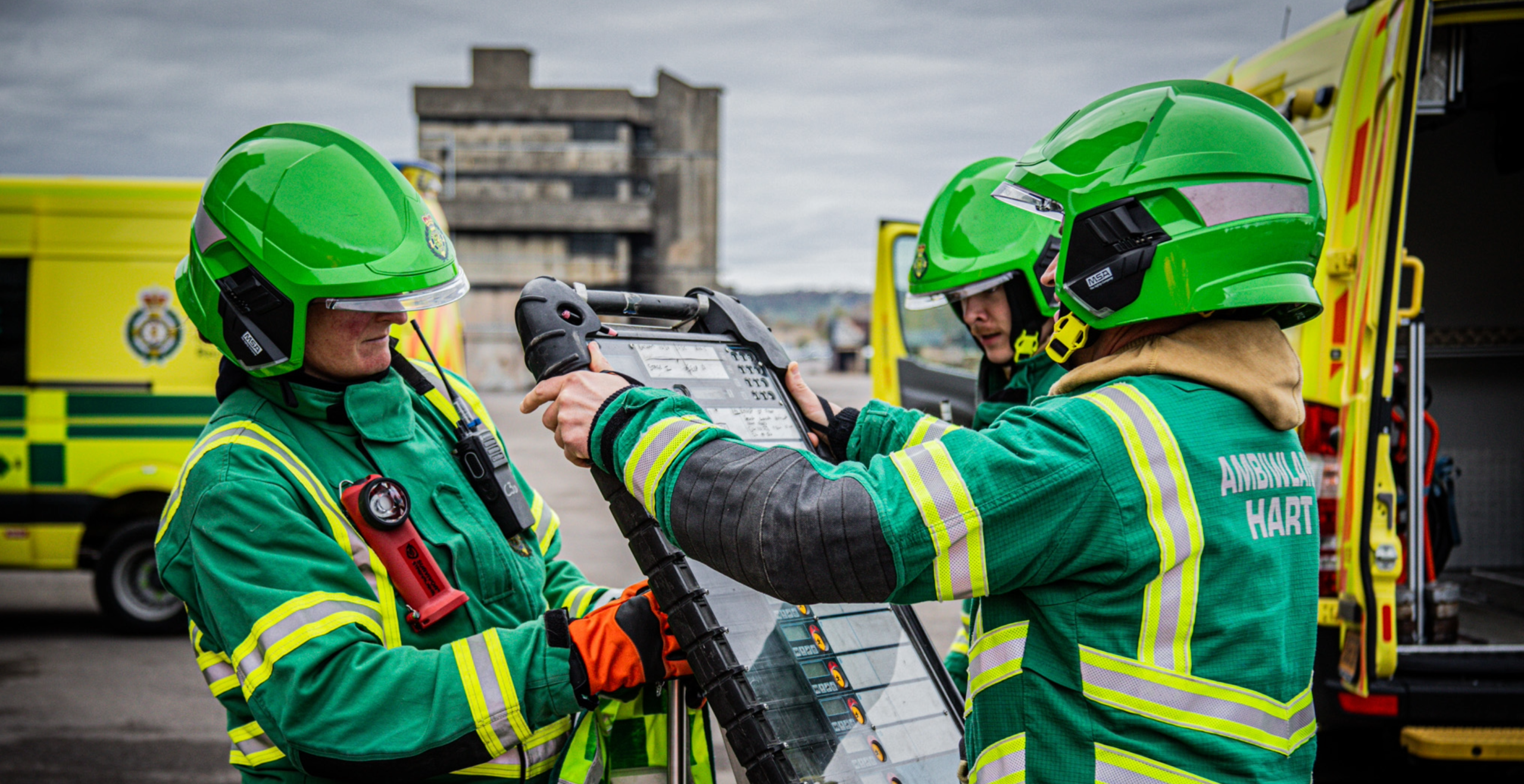
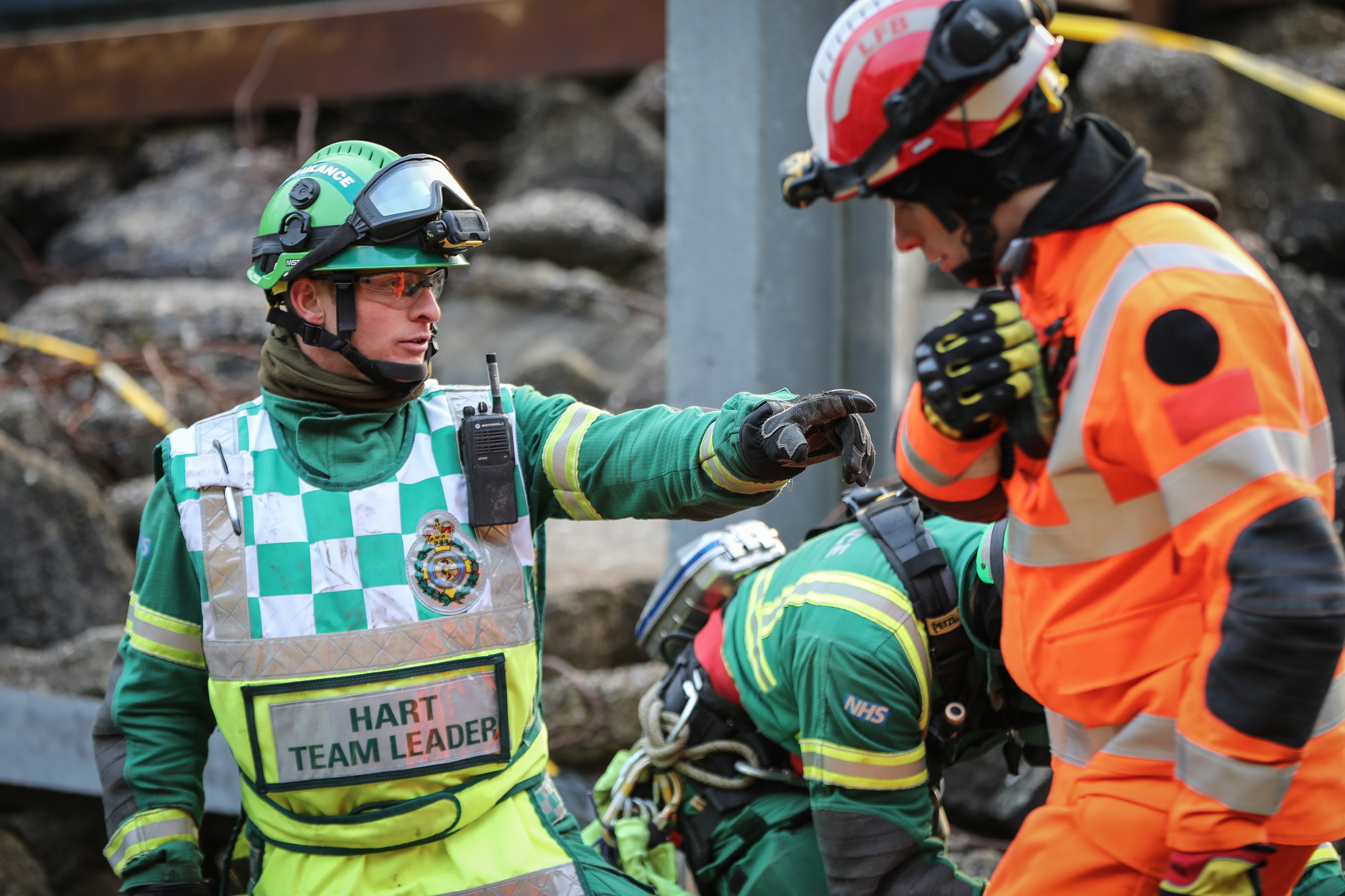
The ECU works closely with JESIP at the national level ensuring that the JESIP Doctrine and its corresponding operating principals are embedded within the NHS emergency capabilities. We also support the national coordination of exercises and learning under JESIP for the emergency capabilities.
‘Interoperability’ is also a sector specific feature of the specified NHS emergency capabilities. A national level of consistency is maintained for each capability across the ten English NHS Ambulance Trusts. This is critical for operational effectiveness, the safety of responders and optimising care for casualties.
The NHS emergency capabilities operate at the local and regional level as part of ‘business as usual’ emergency ambulance deployments. Their interoperable configuration means that they can also be combined to provide a national capability to mitigate against the reasonable worst-case scenarios articulated in the UK National Risk Register.
First and foremost, the NHS emergency capabilities are commissioned as nationally interoperable contingencies. They must maintain a high state of readiness to deploy in a national configuration to major or complex emergencies anywhere in the England, and with Government Department approval, to anywhere in the United Kingdom, for example, devolved administrations (Scotland, Wales, and Northern Ireland), as well as to Crown Dependencies (Bailiwick of Jersey, Bailiwick of Guernsey, and Isle of Man) and the British Overseas Territories.
To remain interoperable, the capabilities must share a consistent, nationally specified, safe system of work including; procedures, training, equipment and risk mitigation.
Interoperable capabilities have a number of benefits
- Scalability; locally managed and maintained capabilities in a smaller configuration can quickly be scaled up to provide multiplied resources in a larger configuration to respond to incidents of greater complexity or scale.
- Cost and resource efficiency; capabilities that share consistent procedures, training and equipment are more cost effective to commission than independent or ‘standalone’ capabilities within each individual Ambulance Trust. A key contributing factor to this efficiently is having a national team (the ECU) working on behalf of ten Ambulance Services to maintain the provisions and workstreams rather than that activity being repeated ten times in a variable and inconsistent way.
- Resilience; localised gaps in resource or provisions can be quickly offset at the national level because the capabilities across the country share the same provisions and configurations.
- Safety; a nationally consistent safe system of work and associated safety critical systems benefits from a wider pool of national expertise along with wider learning and improvement opportunities. Safety critical systems operated within the relative isolation of a single organisation develop at a slower rate and have narrower inputs that those operated at the national level. When a safety issue is identified, national reporting mechanisms mean that the issue can be quickly understood and communicated across the ten organisations to avoid the same issue repeating within another organisation. Mitigations can be quickly managed and addressed at the national level in collaboration with all organisations and responders affected.