
“I could hear the scream of the bombs. Some in the distance, others close by.”
That was how volunteer ambulance driver June Spencer described a night on duty during the Blitz.
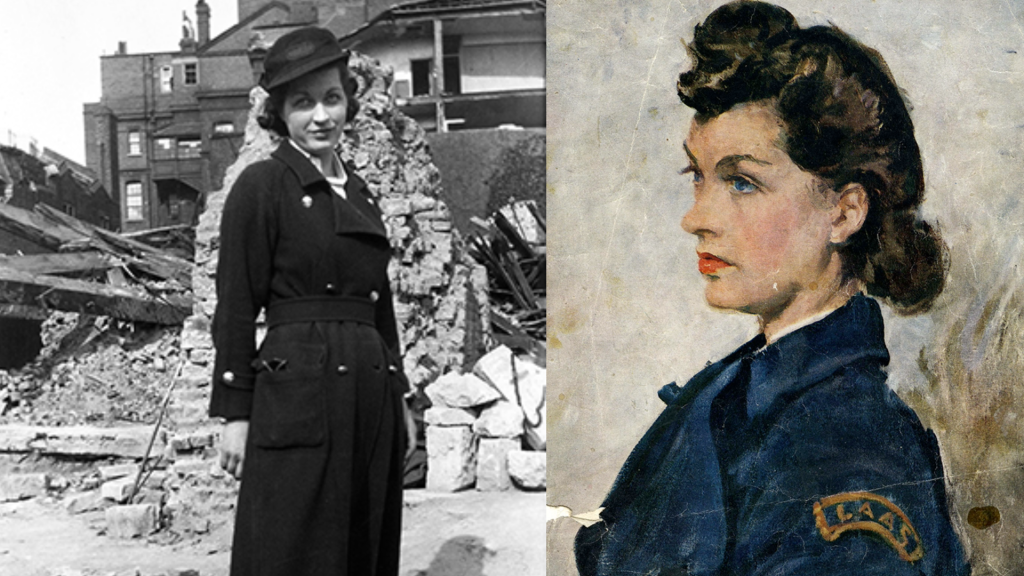
Her wartime diaries have been brought to life by history writer Naomi Clifford in her book Under Fire, which has recently been added to the London Ambulance Service Historic Collection.
The book offers a vivid glimpse into life behind the wheel of an ambulance and caring for casualties in wartime London.
From navigating blacked-out streets and driving through air raids to anxiously waiting for the next call, June’s diary captures both the drama and the drudgery of the era.
June was 19 when she joined the London Auxiliary Ambulance Service which had been set up as part of the civil defence effort. It was the summer of 1940.
Naomi Clifford’s research traces June’s journey from new recruit to frontline duties during some of the city’s darkest days.
June was stationed at Ambulance Station 22 in Chelsea and her training was practical from the start.
In one diary entry she recalled collecting her tin hat and gas mask before learning the routes to hospitals across London. She was also trained in driving in blackout conditions and basic mechanics.
Before every shift, June checked her kit, uniform and ambulance, even pumping up the tyres herself.
But she was soon working in extraordinarily dangerous conditions.
June described helping an injured man who had been trapped beneath rubble after a bombing raid.
“Gave him morphine, got him into my ambulance and the engine would not start. Got some firemen to push it over heaps of glass and rubble and off we went.”
June’s Chelsea station had a glass roof, and crews drove ambulances through blacked-out streets with little protection from the falling incendiaries.
Yet June’s diaries reveal some startling contrasts. The night after Chelsea was heavily bombed, June peeled potatoes at the ambulance station.
Off duty, she met friends for drinks at The Ritz and dinner at The Savoy.
Some shifts brought no call-outs at all. After moving to Ambulance Station 179 in Battersea, June scrubbed ambulances, cleaned toilets, worked in the canteen and waited for something to happen.
More than 5,000 people volunteered for the London Auxiliary Ambulance Service during the war, and over half of those were women.
The volunteers came from across the capital and from many different walks of life, including shop assistants, artists, taxi drivers and housewives.
According to the book, full-time women received £2 a week, compared with £3.25 for men, while part-time volunteers were paid nothing.
June’s story adds another personal account to the Service’s wider history of women on the frontline.
Craig Henty, Head of the London Ambulance Service Historic Collection, said:
“As someone who has worked on an ambulance, I recognise many of the practical details in June’s diaries, from checking the vehicle and equipment to being ready for whatever the next job might bring.
“However the circumstances June faced were extraordinary. Night after night during the Blitz, ambulance crews were called into bombed streets to help pull injured people and bodies from the rubble.
“June did not dwell on the horror in her diaries, but it must have been relentless. Her account gives us a very human view of the women who cared for Londoners through it all, and of the resourcefulness and teamwork that remain at the heart of London Ambulance Service today.”
Thanks to Naomi Clifford’s research and careful use of June Spencer’s diaries, the Historic Collection now has a vivid record of the courage, resilience and everyday life in a city under attack.
The London Ambulance Service Historic Collection preserves historic vehicles, photographs, documents, uniforms, equipment and memorabilia spanning more than a century of emergency care in the capital. To book a visit to the Historic Collection, please email: [email protected] or find out more, on our website.
Under Fire: The Blitz Diaries of a Volunteer Ambulance Driver is by Naomi Clifford and you can read more about the author on naomiclifford.com