A midwife and a paramedic from London Ambulance Service have returned to work after responding in Venezuela where they cared for people injured or displaced by the devastating earthquakes that killed more than 6,000 people.
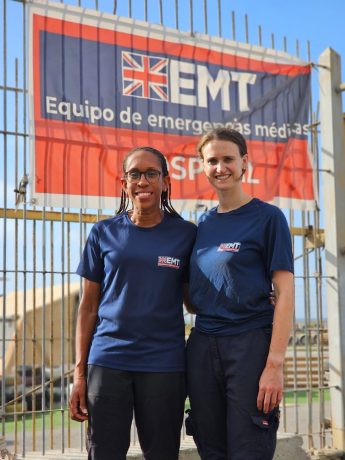
Midwife Camella Main and Advanced Paramedic Kat Spence were part of the UK Emergency Medical Team, deployed by the British Government, to work in a field hospital in central La Guaira, Venezuela.
The field hospital provided primary care, emergency care, maternity services, paediatrics and rehabilitation, alongside mobile clinics for communities with limited access to healthcare.
Heavy overcrowding in temporary camps, along with severely damaged municipal water infrastructure and inadequate sanitation, has led to rising cases of acute respiratory infections, viral syndromes, and gastrointestinal illnesses as well as outbreaks of infectious diseases.
Delivering healthcare after a disaster
Kat, an Advanced Paramedic in Urgent Care, worked predominantly within primary healthcare, one of the busiest areas of the field hospital.
Much of the team’s work focused on the wider impact of the disaster on people’s health, rather than injuries directly caused by the earthquakes.
Kat Spence, from Deptford Ambulance Station, said:
“You genuinely never knew who was going to come through the door next. We saw everything from acute illness and minor injuries to people whose long-term conditions, such as hypertension and diabetes, had become much more difficult to manage.
“A lot of people had lost their homes, their medication or access to the healthcare they would normally rely on. So, although we were responding to an earthquake, much of what we were treating were the secondary effects of that disaster on people’s health.
“Working with fewer resources really challenged you as a clinician. You had to rely heavily on your clinical assessment and decision-making, work with what was available and constantly adapt.
“One of the things I valued most was working alongside Venezuelan doctors and healthcare professionals. They brought an incredible amount of local knowledge and experience, and we were constantly learning from each other.”
Providing maternity care after the earthquake
For Camella, the deployment highlighted the importance of continuing maternity and reproductive healthcare during a humanitarian emergency.
Local obstetricians estimated that approximately 2,000 pregnant women in La Guaira currently require maternal healthcare support. Following the earthquake there was very few maternity services in operation and accessing care became extremely challenging.
Many of the perinatal women in La Guiara are especially vulnerable suffering with mental health illnesses, being homeless or having experienced sexual assault.
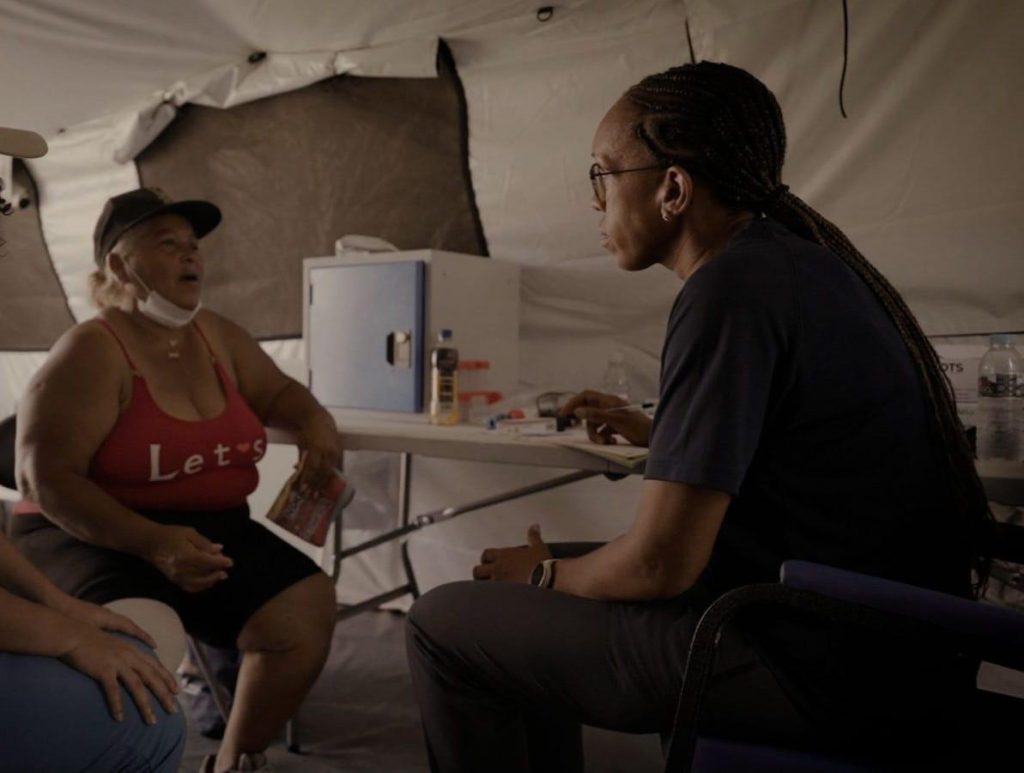
Camella worked as part of the maternity team at the field hospital and through outreach clinics. The team supported women with antenatal and postnatal care, contraception, STI screening and treatment, and wider sexual and reproductive health needs.
Camella, Lead Midwife at London Ambulance Service and Consultant Midwife at East Midlands Ambulance Service, said:
“Pregnancy and women’s healthcare needs don’t stop because there has been an earthquake. Many of the women we met were also dealing with displacement, psychological trauma and disruption to their usual healthcare.
“One woman who was homeless following the earthquakes came to the field hospital requesting a review of her implant. I performed some checks and discovered that she was actually 22 weeks pregnant. She thought she was going through the menopause and had no idea she was expecting a baby.
“She was incredibly happy and described the baby as a miracle that had brought hope to her family after the devastation of the earthquake.
“Being able to perform tests, provide her with some health advice and ensure she knew how to stay safe in pregnancy was a real honour.”
Taking healthcare beyond the field hospital
Alongside the field hospital, the UK Emergency Medical Team ran mobile clinics to reach displaced communities across La Guaira, where many people faced significant barriers to accessing healthcare.
Kat and Camella both took part in outreach work and adapting temporary spaces to provide treatment.
Kat said:
“Some of the communities we visited were a significant distance from the field hospital, so taking healthcare out to people was really important.
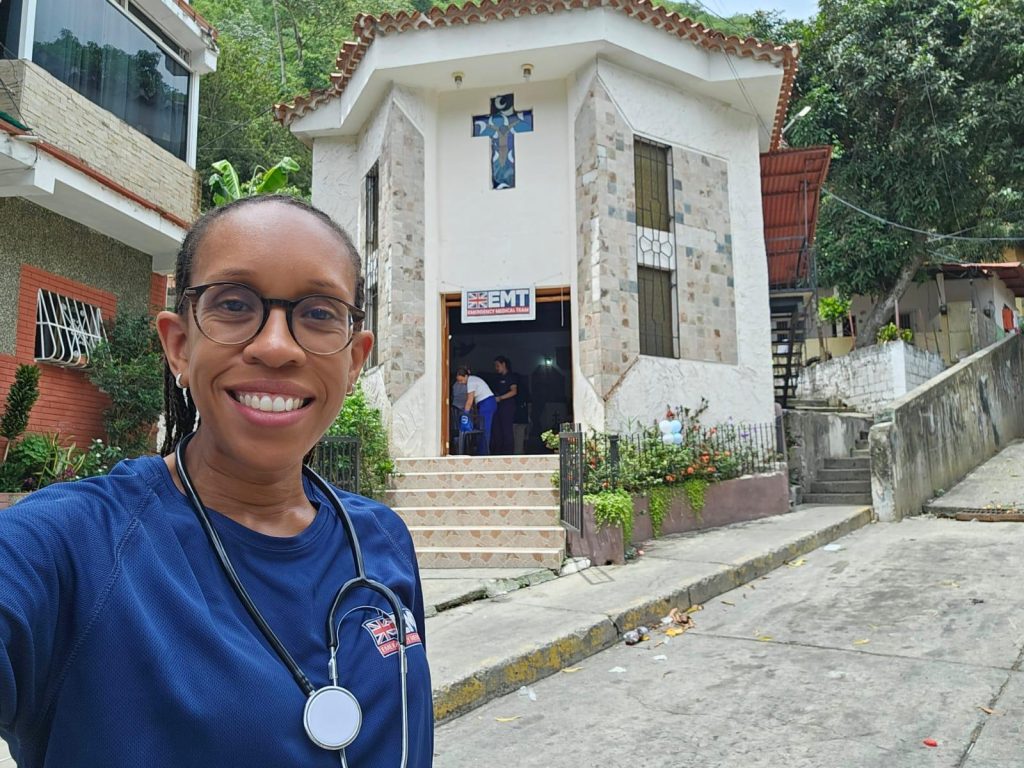
“One of the mobile clinics I worked at was set up inside a small local church. We used the church pews as consultation areas and people from the surrounding community came to see us throughout the day.
“Despite everything the community had been through, they welcomed us so warmly and even brought us a huge pot of homemade pumpkin soup to say thank you.
“It was such a simple gesture, but it really captured the warmth and generosity we experienced throughout the deployment.”
Reflecting on the experience
For Kat, one of the most striking aspects of the deployment was witnessing both the profound impact of the disaster and the strength of the communities affected.
Kat said:
“The scale of loss and grief was unlike anything I had experienced before in my career. Hearing people’s stories and seeing the psychological impact of what they had experienced is something that will stay with me for a long time.
“But alongside that grief, what struck me most was the warmth and generosity of the Venezuelan people. Despite everything they had been through, there was such a strong sense of community, hope and solidarity.
“I’m extremely grateful to have had the opportunity to play a small part in supporting the people of Venezuela, and it’s an experience I know I’ll carry with me for a long time.”
Camella said:
“Nothing can fully prepare you for working as a midwife so close to the epicentre of such a tragic natural disaster. However, working with such a determined and courageous national and international team meant that we were able to provide safe and compassionate care to many people in great need.
“Caring for perinatal women during such a vulnerable time with limited resources and equipment was a challenge and a privilege.
“There are many skills which I learnt from the staff and patients which will be invaluable in my role in London Ambulance Service.”
The UK Minister for Development Kirsty McNeill said:
“I pay tribute to the extraordinary people, like Camella and Kat, who put themselves in harm’s way to save lives. Every day, humanitarian workers bring food, healthcare, shelter and protection to communities facing crisis. Yet the challenges they face have rarely been greater. More than 250 million people are expected to need humanitarian assistance in 2026.
“When crisis hits, the UK is proud to work with local responders and trusted international partners, combining knowledge and resources to reach people in greatest need.”
The British Government’s UK Emergency Medical Team is funded by the Foreign, Commonwealth and Development Office (FCDO) and delivered by UK-Med, a Manchester-based humanitarian medical charity.