A woman who suffered a cardiac arrest on her way home from watching the London Marathon in 2024 was recently reunited with the paramedics and police officers who helped to save her life when her heart stopped.
Mel Baker, 52, from Somerset, had been watching a friend take part in the London Marathon with her daughter Nichea, 26, when she collapsed.
Paramedics from London Ambulance Service and officers from City of London Police, some of whom had been working at the event, rushed to her rescue.
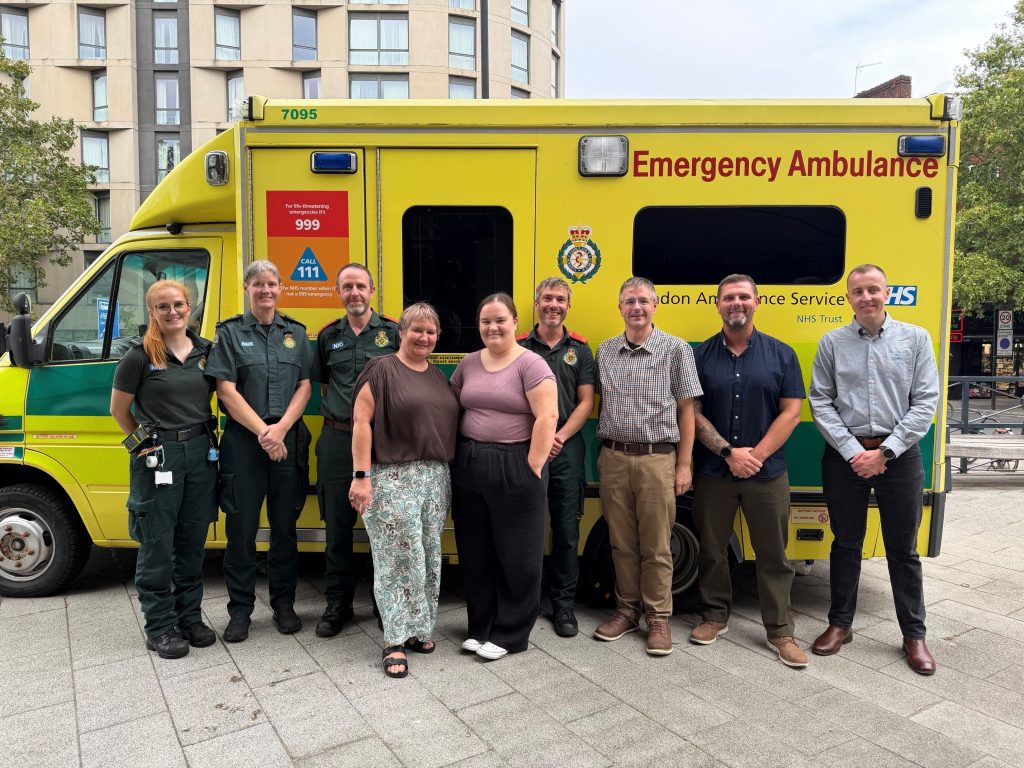
And recently, Mel and Nichea met with the crews who saved her life at London Ambulance Service’s Waterloo HQ. Mel said:
“It was amazing to meet the paramedics and police officers. I felt like I had to thank them and I’m so glad to have met them. They saved my life.
“I couldn’t write what I wanted to say, it just wasn’t enough – so this meeting was perfect. Their response was absolutely amazing. If it wasn’t for them, I wouldn’t be stood here today. I cannot thank them enough.”
Daughter Nichea said:
“It was really scary. I was on my own and I panicked as I wasn’t sure what was going on.
“We had spent the day in London as one of our friends was taking part in the Marathon. And on our way back home my mum just dropped to the floor.
“Luckily there were people around and we called 999. And very quickly the paramedics and police officers turned up and did CPR on her.
“It happened really quickly – without the paramedics and police officers she wouldn’t be here today.”
Mel’s survival is all the more incredible since despite undertaking chest compressions and defibrillation, the LAS crews were unable to restart Mel’s heart. However, she was treated on a specialist pathway.
Extracorporeal Membrane Oxygenation or ‘ECMO’ – undertakes the job of a working heart and lungs, providing oxygenated blood to the vital organs whilst doctors work to treat the underlying cause of the cardiac arrest.
Paramedics on scene were able to contact the nearest ECMO centre at St Bartholomew’s Hospital, to alert the team there that they were bringing Mel in.
She is the first survivor to have benefitted from a new protocol which allows paramedics direct access to a specialist team and specialist equipment at a hospital without having to go to an Emergency Department first. Without this intervention, it is unlikely that Mel would have survived.
Keir Rutherford, Advanced Paramedic in Critical Care, said:
“When we arrived, Mel had been defibrillated once by police officers but unfortunately remained in cardiac arrest. Timely intervention during cardiac arrest is key to maximise chances of survival.
“Mel is alive and back with her family today because of the fast actions of those who responded – including our paramedics, the police officers and the clinicians at St Bartholomew’s. Without them she would have died.
“Mel’s survival highlights how seriously we take clinical innovation here at the London Ambulance Service. We are constantly working to improve the care we deliver to our patients, including those in cardiac arrest.”
Help us to help people in the capital by becoming a London Lifesaver or by donating to the Heart Starters campaign.